Norwood Scale Explained: How to Tell How Advanced Your Hair Loss Is
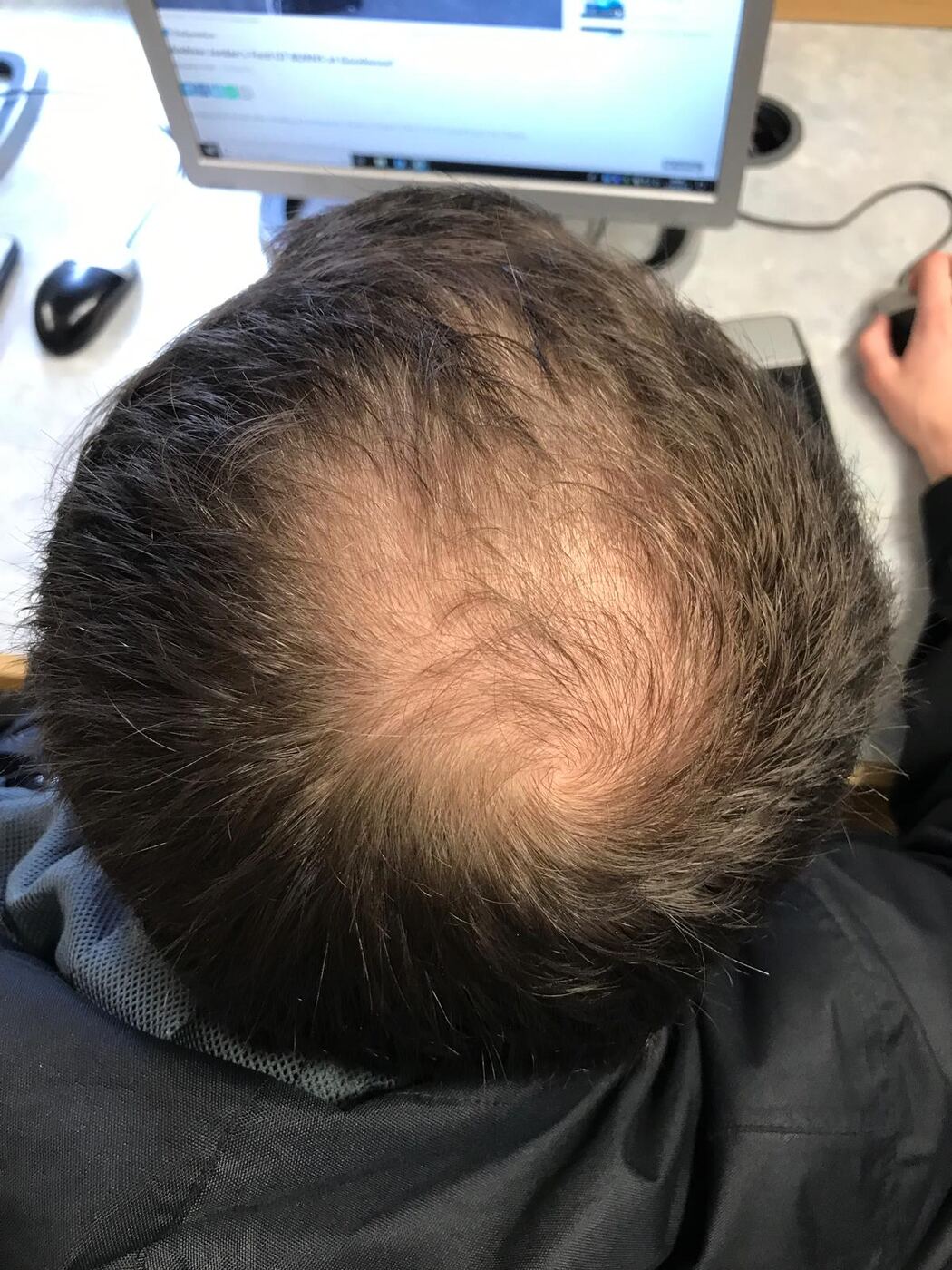
Before anyone thinks about clinics, techniques, or prices, they ask a simpler question in the mirror: how bad is mine, actually? The Norwood scale exists to answer that question with something better than "kind of receding, I guess." It's the standard classification for male pattern baldness — the shared vocabulary that lets you, a surgeon, and every article on the internet talk about the same thing. Here's how it works, how to place yourself on it, and what your stage honestly means if you're weighing a transplant. (Quick disclosure, as always on this blog: we're an independent patient coordination service working with a partner hospital in Istanbul — and everything below stays true whether or not you ever contact us.)
What the Norwood scale is
The scale — formally Norwood-Hamilton, after the two doctors who developed and refined it — describes the typical progression of male pattern baldness in seven stages. Pattern baldness usually advances along two fronts: the hairline recedes from the temples, and a thinning spot develops at the crown. The stages describe how far each front has advanced and whether they've merged. It's not a diagnosis and it says nothing about the cause — it's a map of the territory.
The seven stages
| Stage | What it looks like | What it typically means |
|---|---|---|
| 1 | Little to no recession — a youthful hairline | No visible pattern loss; nothing to treat |
| 2 | Slight recession at the temples | Often called a "mature hairline" — the border zone, not yet true balding |
| 3 | Clear, deeper recession at both temples | Generally considered the first stage of actual balding |
| 3 Vertex | Stage 3 hairline plus a thinning spot at the crown | Loss advancing on both fronts — a very common presentation |
| 4 | Stronger frontal recession and a larger bald crown, separated by a band of hair | Noticeable loss; the band across the top still connects the sides |
| 5 | The band separating front and crown narrows | The two areas approach each other; coverage needs grow |
| 6 | Front and crown merge — the bridge is gone | Extensive loss across the top of the head |
| 7 | Only a horseshoe of hair remains at the back and sides | The most advanced stage; donor hair is what remains |
How to find your own stage
- Use photos, not the mirror: front-on at eye level, top-down, and the crown (someone else takes that one, or use a second mirror). Bathroom-mirror foreshortening flatters everyone.
- Compare your photos against the stage descriptions above — pay attention to both fronts separately: temples AND crown.
- Compare with photos of yourself from two or three years ago. The trend matters as much as the snapshot.
- Accept the error bars: the crown is genuinely hard to judge on yourself, and stages 2–3 are the zone where self-assessment goes wrong most often.
If you've seen our consultation form, this is exactly why its hair-loss question mirrors these stages — and why it includes the honest option: "I'm not sure — I'll send photos." A photo assessment beats self-classification every time; the stages above just help you speak the language.
A note for women
The Norwood scale describes the male pattern. Female pattern hair loss usually progresses differently — diffuse thinning along the part line rather than temple recession — and is classified on a separate scale (the Ludwig scale). If that's your situation, skip the self-classification entirely and go straight to a photo assessment; the patterns are different enough that the advice in men's forums mostly doesn't transfer.
What your stage honestly means for a transplant
Here's the part most clinic content soft-pedals, so let's be direct — with the usual caveat that these are general patterns, and only an assessment of your actual head gives your real answer:
- Stages 1–2: usually too early. There's little to restore, and if your loss is still progressing, transplanted areas can end up as islands when the surrounding hair keeps thinning. An honest provider will more often tell you to monitor and reassess than to book surgery.
- Stages 3–5: generally the territory where transplants make the most sense — enough loss for a visible improvement, and typically enough donor hair to cover it convincingly in a single session.
- Stages 6–7: a transplant can still be possible, but this is expectation-management territory. Donor hair is finite; at advanced stages the honest conversation is about framing and density priorities, not full restoration. Be wary of anyone who promises otherwise without seeing your donor area.
Where the price fits into this
One practical note that surprises people: with per-graft pricing, your Norwood stage effectively sets your bill — more loss, more grafts, more money, decided by a count you can't verify. Our partner hospital's package works differently: €1,750, fixed, the same for every patient regardless of stage or graft count. Your stage determines whether a transplant makes sense and what result to expect — not what you pay.
Skip the self-diagnosis — get your stage assessed free
Send three photos (front, top, crown) and get an honest assessment within 24 hours: your stage, whether a transplant makes sense for you, and the confirmed all-in price if it does. No obligation.
Get My Free AssessmentFrequently asked questions
Bottom line: the Norwood scale gives you the vocabulary, photos give you the evidence, and an honest assessment gives you the answer. If you're moving from "what stage am I?" to "what would it involve?", the recovery timeline and the full cost breakdown are the natural next reads on this blog.